Waiting rooms fill up fast during busy hours. Patients grow anxious, staff feel the pressure, and delays start to affect the entire day.
Unlike a retail queue, a healthcare wait often carries real stress. Patients are frequently unwell, worried, or simply eager to get answers.
Even a well run facility can feel chaotic without a clear way to manage this flow.
This is why hospitals and clinics increasingly rely on a queue management system for healthcare. It brings structure to patient flow without adding pressure to staff.
This guide looks at common patient flow challenges and how the right system can help address them.
Why Patient Flow Matters in Healthcare Settings
Patient flow refers to how people move through a facility, from check-in to treatment and discharge. When this flow breaks down, problems tend to spread quickly.
A single delay at check-in can push back appointments for hours. Overcrowded waiting areas increase stress for patients and make staff work feel harder.
Smooth patient flow is not just about convenience. It directly affects patient experience and the ability of staff to provide timely care.
Facilities that manage flow well tend to see fewer complaints and less staff burnout over time.
What Is a Queue Management System for Healthcare?
A healthcare queue management system organises how patients check in, wait, and get called for service. It replaces informal waiting room lines with a structured process.
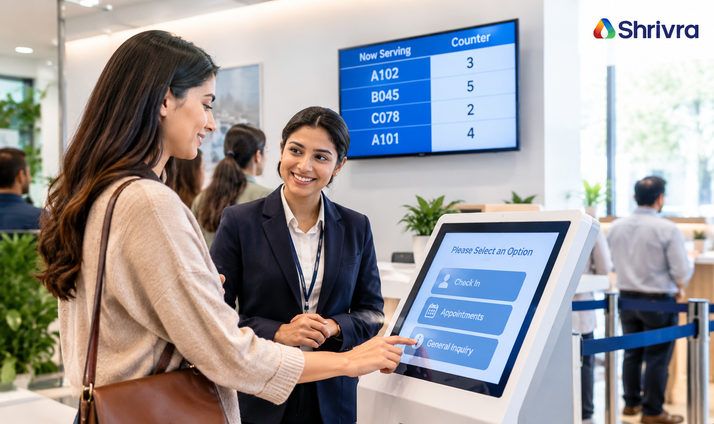
Patients typically check in as a walk-in or through an online booking. Check-in usually happens through a kiosk or QR code scan.
Once checked in, the system generates a ticket and places the patient in the queue. Staff can then call patients in the right order, based on appointment time or urgency.
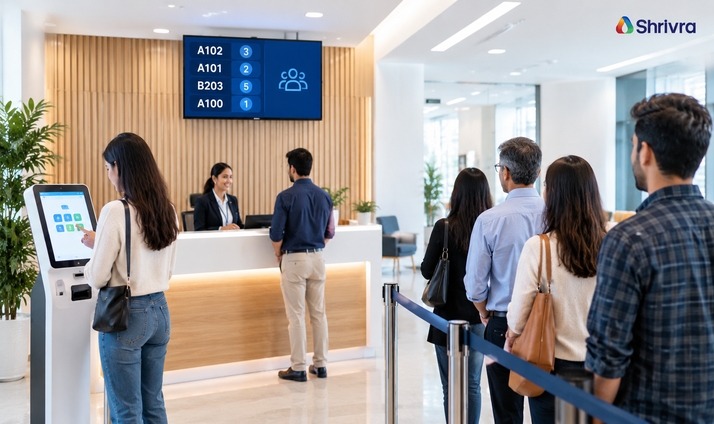
This structure keeps the process consistent, even when the waiting room fills up quickly.
Common Patient Flow Challenges in Hospitals and Clinics
Several recurring problems affect patient flow across healthcare facilities.
-
Long, unpredictable wait times frustrate patients and staff alike.
-
Overcrowded waiting areas create discomfort, especially during peak hours.
-
Missed appointments disrupt schedules and waste available time slots.
-
Staff become overwhelmed when demand spikes without warning.
-
Patient flow often varies inconsistently across different departments.
These challenges rarely appear in isolation. One delay often triggers a chain reaction throughout the rest of the day.
Identifying which of these issues affects your facility most is a useful starting point.
How Patient Queue Management Improves the Experience
Structured patient queue management addresses these challenges directly, rather than leaving staff to manage them manually.
Clear check-in steps reduce confusion at the front desk. Patients know their ticket number and rough position in the queue right away.
Automated notifications keep patients informed as their turn approaches. This reduces the anxiety that comes from waiting without any updates.
Fewer missed turns also result from timely reminders. Patients receive alerts through SMS, email, or a display screen, reducing confusion about when to return.
This structure benefits staff too, since fewer patients need individual updates throughout the day.
Key Features of a Hospital Queue System
A strong hospital queue system typically includes several core features suited to healthcare environments.
-
Flexible check-in. Patients can check in as walk-ins or through pre-booked online appointments.
-
Kiosk and QR code support. These options reduce front desk congestion during busy periods.
-
Real-time notifications. Updates arrive through SMS, email, or a mobile app as the patient's turn nears.
-
Cross-department monitoring. Staff can track patient traffic across multiple departments or branches.
-
Appointment and walk-in balance. The system merges scheduled visits with walk-in patients smoothly.
-
Reporting tools. Data on wait times and patient traffic supports better planning.
Not every facility needs every feature immediately. Larger hospitals often need more department-level detail than a small clinic.
Reviewing your facility's busiest points helps determine which features matter most.
Supporting Clinic Queue Management Across Departments
Smaller facilities benefit from clinic queue management just as much as large hospitals, though the scale differs.
A single clinic may only need to manage one or two service points. Multi-department hospitals require routing between areas such as radiology, pharmacy, and specialist consultations.
Priority routing matters here too. Urgent cases can be flagged and moved ahead of routine appointments when needed.
This flexibility allows the same underlying system to support very different facility sizes effectively.
A growing clinic can also scale up its use of these features over time.
Benefits of Better Patient Flow
Improving patient flow brings several practical benefits to healthcare facilities.
-
Reduced wait times. Structured queues help patients move through the system more predictably.
-
Less overcrowding. Digital check-in spreads patients out instead of concentrating them in one waiting area.
-
Lower stress levels. Clear updates reduce the uncertainty that often makes waiting feel worse.
-
Better resource allocation. Real-time data helps staff anticipate busy periods and adjust accordingly.
-
Improved staff productivity. Less time spent managing confusion means more time available for patient care.
These benefits often compound, creating a noticeably smoother experience across the whole facility.
Over time, this can also support better patient satisfaction scores and staff retention.
What to Look for in a Healthcare Queue Solution
Choosing the right platform depends on a facility's size and existing systems. A few factors deserve particular attention.
-
Integration with hospital systems. The platform should connect with existing hospital information systems where possible.
-
Multi-department routing. Larger facilities need support for routing between different service areas.
-
Security and compliance. Look for platforms that follow recognised healthcare data protection standards.
-
Ease of use. Staff and patients should be able to use the system without extensive training.
-
Reporting depth. Strong analytics help identify recurring bottlenecks across departments.
How Qwaiting Supports Healthcare Queue Management
Qwaiting is a queue management system built to support hospitals and clinics managing patient flow.
Patients can check in as a walk-in or through an online booking, using a kiosk or QR code scan. The system generates a ticket and places them in the queue automatically.
Notifications reach patients through SMS, email, or mobile updates as their turn approaches. This reduces the uncertainty that often adds to patient stress.
Real-time monitoring allows staff to track patient traffic and queue status across different departments or branches. Qwaiting also integrates with hospital information systems, including platforms like Plato and Elite Plus.
One notable healthcare example is Apollo Hospitals, which used Qwaiting to help manage patient flow across its network of branches. According to Qwaiting, the platform has helped cut wait times by up to 35 percent.
The platform is trusted across healthcare organisations in over 70 countries and includes enterprise-grade security. A free trial is available for facilities wanting to test the platform directly.
This combination of check-in, notifications, and reporting supports smoother patient flow across departments.
Final Thoughts
Patient flow directly affects both patient experience and staff workload in healthcare settings. Long, unpredictable waits create stress that goes beyond simple inconvenience.
A queue management system for healthcare addresses this through structured check-in, clear notifications, and better visibility across departments.
Facilities that invest in this structure often see calmer waiting areas within weeks.
Qwaiting brings these features together in a platform built to support hospitals and clinics of different sizes. Explore Qwaiting to see how it can support patient flow at your facility.