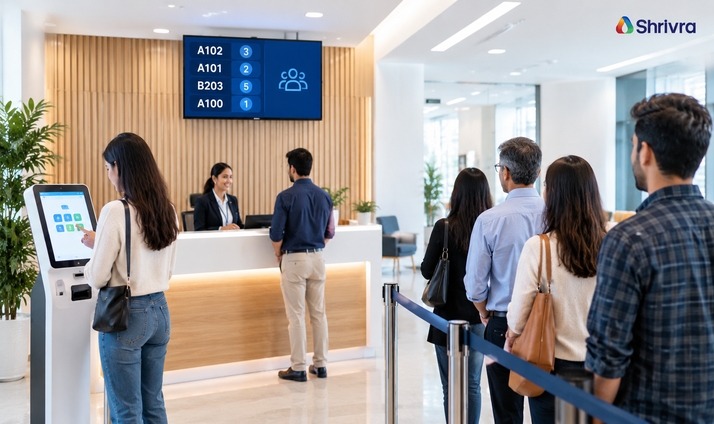
Long waits frustrate customers and put unnecessary pressure on staff. Left unmanaged, these delays can quietly cost a business repeat visits.
Many service businesses face the same challenge daily. Bookings pile up, walk-ins arrive unpredictably, and lines start forming faster than staff can manage them.
These challenges show up in restaurants, clinics, banks, and retail stores alike.
Fortunately, there are proven ways to address this. Understanding how to reduce customer waiting time starts with looking closely at where delays actually happen.
This guide covers ten practical strategies. Each one targets a different part of the waiting experience, from check-in to service delivery.
Why Reducing Wait Times Matters
Before exploring solutions, it helps to understand the impact of long waits. Customers who wait too long often leave frustrated, even if the service itself was good.
Long queues can also affect staff morale. Employees under pressure from visibly frustrated customers tend to make more mistakes.
Businesses that actively work to reduce wait times often see better customer satisfaction and stronger repeat business.
Reducing customer waiting time consistently improves satisfaction and encourages repeat visits.
1. Implement a Virtual Queue System
Traditional physical lines force customers to stand and wait in one place. A virtual system lets them join a queue remotely instead.
Customers can check in through a kiosk, QR code, or mobile app. This is where queue management software becomes especially useful, since it organises the entire process automatically.
Removing the need to stand in a fixed spot immediately improves the waiting experience. Customers can wait in a seating area, their car, or nearby shops instead.
This flexibility often reduces the frustration customers associate with waiting in place.
2. Offer Online Appointment Booking
Allowing customers to book ahead reduces unpredictable spikes in demand. It also gives businesses better visibility into expected traffic each day.
When online bookings merge cleanly with walk-in customers, wait times become easier to manage across the board. Staff can plan their day with more confidence.
This also lowers the number of customers waiting during unexpected rush periods.
3. Send Real-Time Wait Time Updates
Uncertainty makes waiting feel longer than it actually is. Sending updates through SMS or a messaging app helps set clear expectations.
Customers who know roughly how long they will wait tend to feel more patient than those left guessing. This small change often reduces complaints noticeably.
It also gives customers the choice to step away briefly without losing their place.
4. Add Self-Service Check-In Kiosks
Manual check-in at a front desk can slow things down, especially during busy periods. Self-service kiosks speed up this first step significantly.
Customers can check in within seconds, reducing the initial bottleneck that often forms at the start of a queue.
This leaves staff more time to focus on the service itself.
5. Analyze Peak Hours and Adjust Staffing
Every service business experiences busier periods at certain times. Reviewing past data helps identify exactly when these peaks occur.
Adjusting staff schedules around these patterns reduces the chance of long queues forming when demand is highest. This prevents avoidable delays during predictable rush periods.
Historical data often reveals patterns that are easy to overlook otherwise.
6. Cross-Train Staff for Flexibility
Staff trained in multiple roles can shift where needed during busy moments. This prevents one bottleneck from slowing down the entire queue.
Flexibility among staff often makes a noticeable difference during unpredictable rushes. A single trained employee can cover gaps quickly when needed.
This reduces reliance on any single staff member during busy shifts.
7. Simplify the Check-In Process
Complicated intake forms or lengthy check-in steps add unnecessary delays. Reviewing this process regularly can reveal steps that no longer serve a clear purpose.
Removing even one unnecessary step can meaningfully speed up the overall process. Customers notice these small improvements more than businesses often expect.
Testing the process from a customer's perspective often reveals hidden friction points.
8. Improve Queue Transparency
Customers tolerate waiting better when they understand what is happening. Clear signage or digital displays showing queue position and estimated wait times help.
Transparency reduces the anxiety that often comes with uncertain waiting. It also reduces the number of customers asking staff for updates.
This lets staff focus more on service and less on repeated explanations.
9. Automate Routine Tasks
Manual data entry and repetitive administrative tasks slow staff down. Automating these tasks frees up time for staff to focus on serving customers directly.
Fewer manual steps behind the scenes often translate into faster service at the counter. This benefit compounds as customer volume increases.
It also reduces the risk of manual errors during busy periods.
10. Review Wait Time Data Regularly
Ongoing reviews reveal patterns that are not obvious day to day. Tracking wait times, service times, and no-shows over weeks or months highlights recurring issues.
This data helps businesses fine-tune their approach continuously rather than guessing at solutions. Small, consistent adjustments often produce the biggest long-term improvements.
Setting a regular schedule for these reviews keeps the process consistent.
Combining Strategies for Best Results
No single strategy solves customer waiting time on its own. The best results usually come from combining several approaches together.
For example, virtual queuing paired with real-time updates addresses both the physical wait and the uncertainty around it. Staffing adjustments alongside automation further reduce bottlenecks during busy periods.
Reviewing wait time data regularly helps identify which combination works best for a specific business. What works for a busy clinic may look different from what works for a retail store.
How Qwaiting Helps Reduce Customer Waiting Time
Qwaiting is a queue management system built to address many of the strategies covered in this guide.
Customers can join a queue through a QR code, kiosk, or mobile app. This avoids the need to stand in a fixed line. Online appointment bookings merge automatically with walk-in customers.
The platform uses AI-powered wait time prediction to help forecast demand and support staffing decisions. Digital signage displays call the next customer, with voice announcements available in multiple languages.
SMS and WhatsApp alerts keep customers updated on their turn, reducing the uncertainty that makes waiting feel longer. Analytics tools track wait times, service times, and staff productivity over time.
According to Qwaiting, businesses using the platform have cut wait times by up to 35 percent. It is used across industries including banking, healthcare, retail, and government services.
A free trial is available for businesses wanting to test these features directly.
This makes it easier to apply several of the strategies above without juggling multiple separate tools.
Final Thoughts
Reducing customer waiting time rarely comes down to one single fix. It usually requires a combination of better processes, clear communication, and the right technology.
Strategies like virtual queuing, appointment booking, and real-time updates address different parts of the waiting experience. Together, they create a noticeably smoother process for customers and staff alike.
Small, consistent changes often make the biggest long-term difference for busy service businesses.
Qwaiting brings several of these strategies into one connected platform. Explore Qwaiting to see how it can help reduce wait times at your business.