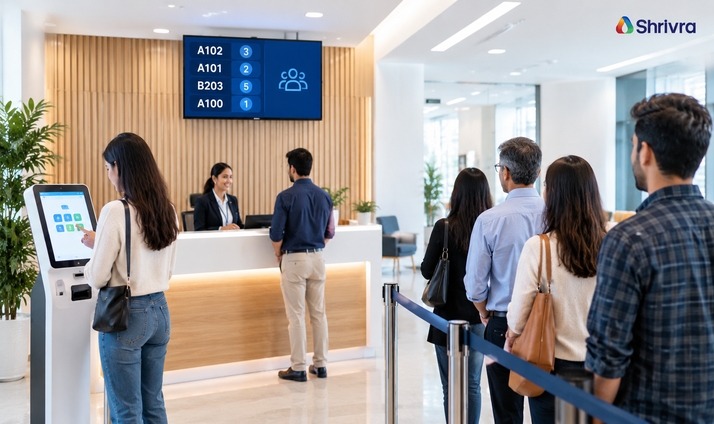
Long lines frustrate customers and slow down service. Staff struggle to keep track of who is next, especially during busy hours.
This is a common problem across banks, hospitals, retail stores, and government offices. Manual queuing methods simply cannot keep pace with growing customer volumes.
This is where a queue management system comes in. It replaces messy physical lines with an organised, trackable process.
For operations managers, this matters directly. Shorter waits and organised queues lead to better service and fewer frustrated customers.
It also reduces pressure on staff working the front line each day.
This guide explains what a queue management system is, how it works, and what to look for when choosing one.
What Is a Queue Management System?
A queue management system is software that controls how customers enter, wait, and get served. It replaces the traditional first-come-first-served line with a structured process.
Instead of standing in a physical line, customers join a queue digitally. This can happen through a kiosk, QR code, mobile app, or online booking. The system then calls them forward automatically.
Behind the scenes, the system tracks every step. It records wait times, service times, and staff performance for later review.
Managers can use this data to spot patterns and adjust staffing as needed.
How Does a Queue Management System Work?
Most queue management systems follow a similar four step process, regardless of industry.
-
Customers join the queue. This can happen through a kiosk, QR code scan, mobile app, or online appointment booking.
-
The system manages routing. Appointments and walk-ins get organised automatically, based on service type or priority.
-
The customer gets notified. Alerts arrive through SMS, WhatsApp, or a display screen, letting the customer know their turn is near.
-
Staff serve the customer. The queue appears on signage or dashboards, so staff always know who is next.
This structured flow replaces guesswork with a clear, trackable process from start to finish.
Types of Queue Management: Physical vs Digital
Traditional queue management relies on a physical line, often with paper tokens or numbered tickets. Customers must stay in place until called.
Digital queue management removes this requirement. Customers can check in digitally and receive updates without standing in a fixed line.
This shift matters most in busy locations. It reduces overcrowding and gives customers the freedom to wait more comfortably.
Staff also benefit, since digital systems reduce confusion around who is next.
What Is a Virtual Queue System?
A virtual queue system allows customers to join a queue remotely, without being physically present in a line.
Customers might scan a QR code, book online, or check in through an app. They then wait wherever suits them, such as a waiting area, their car, or a nearby seat.
Notifications alert them when their turn approaches. This reduces the frustration of standing in one spot for an uncertain amount of time.
It also frees up physical space that would otherwise fill with waiting customers.
Core Features of a Modern Queue Management System
Modern platforms typically include several core features that support smooth customer flow.
-
Virtual queuing and mobile tokens. Customers join through a QR code, kiosk, or app.
-
Online appointment booking. Pre-booked slots merge cleanly with walk-in customers.
-
Wait time prediction. Smart algorithms forecast demand and help allocate staff accordingly.
-
Digital signage and token display. Screens call the next customer, often with voice announcements.
-
SMS and messaging alerts. Customers receive updates about their position in the queue.
-
Analytics and reporting. Managers can review wait times, service times, and staff productivity.
Not every business needs every feature immediately. The right combination depends on the type of service and typical customer volume.
Reviewing your busiest hours can help identify which features matter most.
Benefits of Customer Queue Management
Effective customer queue management offers several practical benefits for busy service locations.
It reduces wait times by organising customer flow more efficiently. Customers spend less time standing around, waiting to be called.
It improves the overall customer experience. Clear updates and shorter waits lead to fewer complaints and better satisfaction.
It supports better staff allocation. Managers can see peak hours and adjust staffing levels based on actual demand.
It also reduces overcrowding. Virtual queuing spreads customers out instead of concentrating them in one physical space.
Finally, it provides data for better decisions. Reports on service speed and staff performance highlight areas worth improving.
Many organisations use this data to plan staffing well before peak hours arrive.
Industries That Use Queue Management Systems
Queue management systems support a wide range of service based industries.
Banks use them to organise branch queues and reduce congestion at service counters. Hospitals and clinics use them to manage patient check-ins and appointment arrivals.
Retail stores use queue systems to control checkout lines and in-store traffic. Government offices use them to structure citizen queues across multiple service counters.
Educational institutions and airports also rely on queue systems, managing student services and passenger processing respectively.
Each industry adapts the same core system to its own specific service flow.
How to Choose a Queue Management System
Selecting the right platform depends on your organisation's specific needs. A few factors are worth reviewing carefully.
-
Scalability. The system should support growth across more locations or service counters.
-
Integrations. Check whether it connects with existing CRMs, booking tools, or internal systems.
-
Security and compliance. Look for platforms that follow recognised data protection standards.
-
Multi-channel notifications. Confirm the system supports SMS, messaging apps, and display screens.
-
Reporting depth. Strong analytics help identify bottlenecks and staffing gaps over time.
-
Industry fit. Some platforms are built with specific industries, such as healthcare or banking, in mind.
How Qwaiting Supports Queue Management
Qwaiting is a cloud-based queue management system built to reduce wait times and organise customer flow across service locations.
Customers can join a queue through a QR code, kiosk, or mobile app. Online appointment bookings merge automatically with walk-in customers, keeping service organised.
This combination helps businesses handle both predictable appointments and unpredictable walk-in demand smoothly.
The platform uses AI-powered wait time prediction to help forecast demand and support staff allocation. Digital signage displays call the next customer, with voice announcements available in multiple languages.
Customers receive SMS and WhatsApp alerts about their turn, reducing the need to wait in one fixed spot. Analytics and reporting tools track wait times, service times, no-shows, and staff productivity.
Qwaiting is used across industries including banking, healthcare, retail, government, education, and airports. According to Qwaiting, businesses using the platform have cut wait times by up to 35 percent.
The platform includes enterprise-grade security and is built to support organisations at scale. A free trial is available for businesses wanting to test the platform before committing.
Final Thoughts
A queue management system replaces messy physical lines with an organised, trackable process. It reduces wait times and improves the overall customer experience.
Choosing the right platform depends on your industry, scale, and the features that matter most to your operations.
Qwaiting brings virtual queuing, appointment booking, and real-time analytics together in one platform. Explore Qwaiting to see how it can support your customer flow.